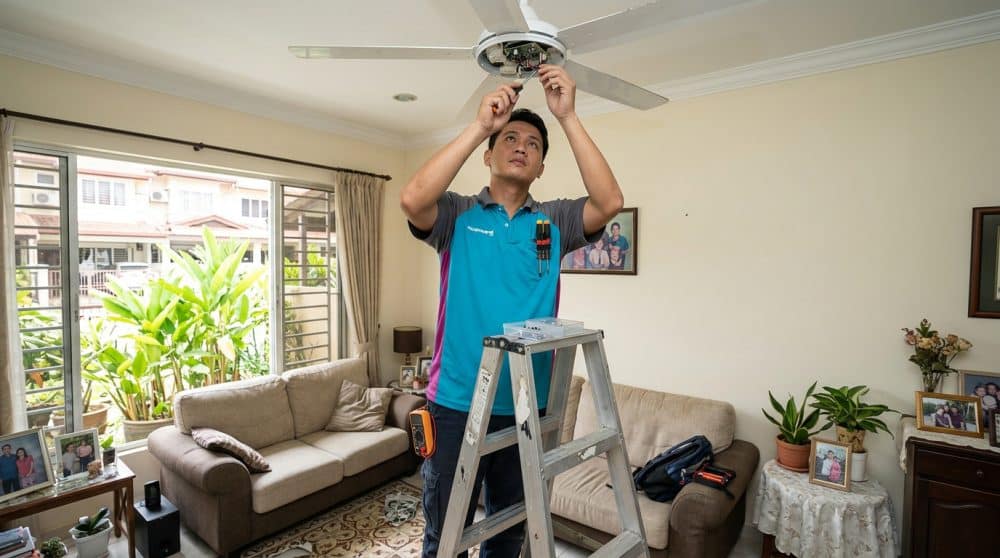


The most direct impact of a blackout is losing your fans, lights, and aircon. But there is another side effect. If you’re unlucky, a blackout can actually disable your fridge even after the power comes on.
When you open your fridge door after a blackout has ended, the light may come on, but inside, it’s warm. The ice is melting into a puddle, and yesterday’s cold leftovers now feel unsafe to eat.
Why Fridges Can Fail After Blackouts
When power goes out and then comes back, it can cause a few problems. The voltage can dip really low or surge suddenly, like a rollercoaster for your electricity. These sudden changes put a lot of stress on your appliance’s electrical parts.
Modern fridges, especially those with inverter technology, have sensitive control boards. These “brains” of your fridge can get fried by quick, strong electrical spikes, or “transient spikes” during power restoration.
The most common failures after a blackout
One of the things that might break when the power goes haywire is the start relay/PTC or the start/run capacitor. If these fail, your compressor won’t be able to kick on, and you might hear a repeated clicking sound.
Another one is damage to the main control PCB or the inverter board. These are the circuit boards that manage everything. If they get hit by a surge, your fridge can stop working completely. Sometimes, a safety device called a thermal overload protector can trip or weaken, also stopping the compressor from starting.
In rare case, the power spike could cause your temperature display to go wonky, or the defrost control might get stuck “on,” or a fan could fail, or even a sensor could stop working correctly.
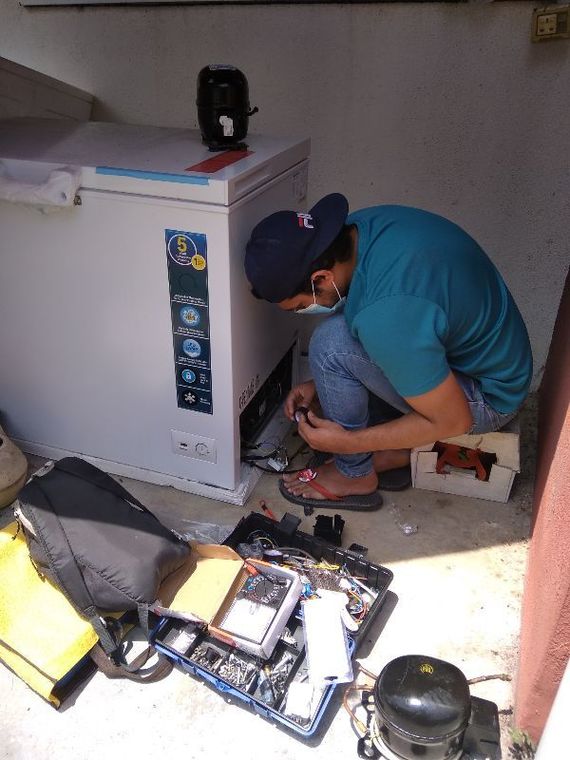
What to Check in the First Hour of a Blackout Ending
The moment you discover your fridge has stopped working, here are a few quick things you can do in the first hour.
Safety and basics
First, keep the fridge and freezer doors closed as much as possible. This helps to keep the cold air trapped inside for longer. If you have milk, meat, or other quickly perishable items, try moving them to a cooler with ice, if you have one.
Next, check the power supply. Go to your electrical box (DB) and check the main switch or the specific breaker for your kitchen. Are all the switches flipped upwards? Anything dropped down? Is the MCB, RCD, or ELCB tripped? If it is, reset it.
For a quick reset, unplug your fridge completely from the wall for about 10 to 15 minutes. This can sometimes clear minor electronic glitches. After waiting, plug it directly back into the wall socket.
Sometimes the wall socket itself might be the problem. Try plugging another small appliance, like a phone charger or a lamp, into the same wall outlet to see if it works. Also, avoid using cheap extension leads for your fridge; it’s always best to plug it directly into the wall.
Now, check your temperature setting. It’s possible that the power surge caused the temperature control to reset to a warmer setting (or a very high number). If it did, just set the temperature back to proper settings (roughly 3 degrees C for the main fridge, and -19 degrees C for the freezer).
Finally, confirm that your fridge hasn’t accidentally switched into “demo” or “showroom mode.” This mode makes the lights work but stops the cooling. That’s what you see when you open a showroom fridge at Best Denki or Senheng, for example. If you see any display that says “OFF” or “DEMO”, you will need to figure out how to reset it for your brand of fridge.
Listen, feel, and observe
If none of the above worked, then it’s time to dig deeper. Place your hand on the compressor at the back of the fridge. Is it humming and vibrating gently, which means it’s running? Or is it completely silent, or perhaps very hot to the touch?
If you hear a clicking sound every few seconds, that often suggests a problem with the start device or capacitor. These parts help the compressor kick into action.
Next, open your fridge door and listen. Can you hear the interior evaporator fan running? And if you can access the back, check if the rear condenser fan is also working. Both need to run for proper cooling.
Look at the fridge’s display panel. Are there any error codes or flashing lights? If you see any, snap a photo of the display and also take a picture of the model label, usually found inside the fridge or at the back. This information will be super helpful later.
Wait vs escalate
If you can feel the compressor running and it seems normal, give your fridge some time. It might take anywhere from 6 to 24 hours for it to get back to its stable, cold temperature. So, just wait and let it do its thing.
But if, after 4 to 6 hours, there’s still no cooling, or if the compressor isn’t starting at all, that’s a red flag. In this case, it’s definitely time to book a professional technician.
When to Call a Pro Immediately
Sometimes, the signs are clear. If you spot any of these “red flags,” it’s time to call a professional fridge technician straight away. Don’t wait, because waiting might make things worse.
Red flags
If you hear a repeated clicking sound but the compressor never starts, that’s a bad sign. Even more serious is any burning smell or visible scorch marks around the fridge. These mean serious electrical problems.
If your electrical breaker trips every time the fridge tries to start, something is seriously wrong. Don’t keep turning your breaker back off and on, as this will cause further damage.
Also, if the compressor at the back is completely cold and silent, or surprisingly hot to touch, it needs immediate attention.
Also look out for loud metallic knocking noises, heavy ice build-up where it shouldn’t be, or water pooling under the unit. These are all signs your fridge is in distress and needs an expert to check it.
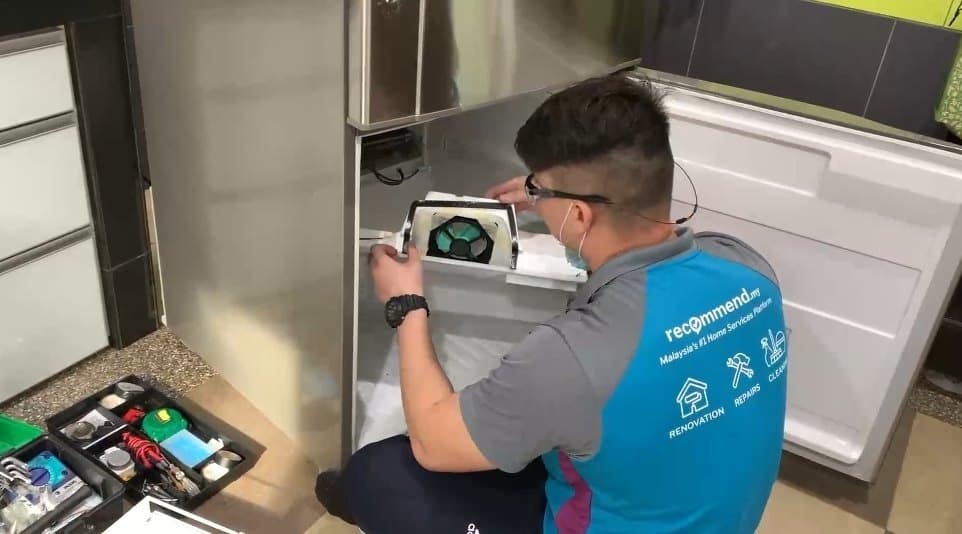
What your technician will ask for
When you call a technician, being prepared with information can help them diagnose the issue faster. They will definitely ask for your fridge’s brand, exact model, and age. When you book a fridge repair at Recommend.my, you will need this info as well.
Be ready to describe the symptoms clearly: what sounds you heard, any smells, and if there are error codes. Also, give them a timeline: when the outage happened, when power came back, and what you’ve tried so far to fix it.
Common fixes and ballpark costs (RM)
After diagnosing the problem, the technician will explain the fix and the estimated cost. Here’s a general idea of common fridge repairs and their ballpark prices in Klang Valley.
Keep in mind that these are estimates, and actual prices can vary. This depends on your fridge’s brand, the availability of parts (especially for specific models), and whether your warranty is still valid.
- Start Relay/PTC + Labour = RM120–300
- Start/Run Capacitor + Labour = RM120–250
- Main Control PCB/Inverter Board = RM400–1,200
- Power Supply Board/Wiring Repair = RM200–500
- Compressor Replacement + Refrigerant = RM1,000–2,000
- Site Diagnostic Fee = RM80
You can see that, depending on the severity of the fix, it might make sense to think about getting a new fridge entirely.
If the estimated cost to repair your fridge is more than 40% of what a brand-new unit would cost, then it’s usually smarter to consider replacing it. This rule is even more important if your fridge has multiple parts failing at once. Think about it, pouring money into an old unit might not give you the best value in the long run.
The age of your fridge also plays a big part in this decision. If your fridge is already more than 8 to 10 years old and is facing major faults after a power outage, then getting a new one often makes more sense. Older fridges are simply not as efficient as newer models.
Today’s inverter models are much better at saving electricity, which means lower bills for you every month. If you’re looking at side-by-side replacements, expect to pay around RM3,000 to RM7,000. But before you rush to the shop, make sure to check the space in your kitchen. Confirm you have enough ventilation clearance around the new fridge and that the doors can swing open properly.
A note about home insurance
Many insurance policies offer coverage for “electrical surge” or “power fluctuation” as an add-on or an endorsement. So, pull out your policy documents and have a good look. To file a claim with your insurance, you’ll need proof of purchase for your fridge, a report from your technician detailing the damage, photos, and your repair or replacement invoice.
Preventing Future Fridge Failure
How do you stop your fridge from getting damaged in the next blackout or power surge? Prevention is always better than cure.
One of the easiest things you can do is get a plug-in voltage or surge protector. Stay away from cheap multi-plugs and undersized extension cords, because they can’t handle the power your fridge needs.
Where you place your fridge also matters. Make sure there’s enough ventilation space around it so the heat can escape. And don’t forget to clean the condenser coils at the back of your fridge every 6 to 12 months. This simple routine helps it run more efficiently and prevents overheating.
During an actual power outage, your smartest move is to keep the fridge and freezer doors shut. Every time you open them, cold air escapes, and warm air gets in.
How Recommend.my Can Help (Same‑Day Fridge Repair in Klang Valley)
Facing a dead fridge after a blackout is stressful enough. You don’t need the added hassle of finding a reliable technician. This is where Recommend.my can step in to make your life easier.
When your fridge gives up, you want it fixed fast and by someone who knows what they’re doing. At Recommend.my, we connect you with licensed fridge repair technicians who are experts in handling all major brands, including Electrolux, Samsung, LG, Toshiba, and more.
To stay updated on power outages, check out the TNB outage map