

Everything you are legally entitled to deduct from your rental income — and the costly mistakes most property owners make when they don’t know the rules.
You just spent RM15,000 fixing up your rental unit. You declare RM15,000 and when LHDN officials come for the audit, you realise that you’ve been doing it wrong all the while. Renovations and repairs have different treatments when you file your taxes.
Table of Contents
1. The Legal Foundation
Income Tax Act 1967 (ITA), Act 53 — Sections 4(a), 4(d), 33(1) · LHDN Public Ruling No. 12/2018, dated 19 December 2018
All rental income derived from letting real property in Malaysia is taxable. This includes residential units, commercial shop lots, office spaces, serviced apartments, and even rooms rented out individually. The question is not whether your rental income is taxable — it always is. The question is how it is taxed, because that determines which expenses you can deduct.
LHDN issued Public Ruling No. 12/2018 specifically to clarify the tax treatment of rental income from real property. It replaced the earlier Public Ruling No. 4/2011 and is the definitive reference document for all landlords in Malaysia. Every deduction decision begins here.
All deductible expenses are governed by Section 33(1) of the ITA, which permits deductions for “outgoings and expenses wholly and exclusively incurred in the production of income.” Every ringgit you claim must pass this test: it must be wholly and exclusively tied to producing your rental income. Personal expenses, capital expenditure, and pre-rental costs do not qualify.
2. Section 4(a) vs 4(d) — Which One Are You?
Before you can know what to claim, you must know your classification. Under Public Ruling No. 12/2018, your rental income falls into one of two categories, and the difference is significant.
Section 4(a) >> Business rental income
You comprehensively and actively provide maintenance or support services — directly or through a hired third party.
- ✓ Direct expenses deductible
- ✓ Indirect expenses deductible
- ✓ Capital allowances claimable
- ✓ Losses can carry forward
File: Form B · Deadline: 30 June / 15 July (e-Filing)
Section 4(d) >> Passive rental income
You collect rent only — without comprehensively providing maintenance or support services to tenants.
- ✓ Direct expenses only
- ✗ No indirect expenses
- ✗ No capital allowances
- ✗ Losses are permanently lost
File: Form BE · Deadline: 30 April / 15 May (e-Filing)
What qualifies as “active maintenance services” for Section 4(a)?
Public Ruling No. 12/2018 is specific. Qualifying services include the maintenance and management of structural elements — stairways, fire escapes, lobbies, corridors, lifts, drains, water tanks, sewers, pipes, wires, and cables. They also include exterior maintenance: driveways, car parks, landscaped areas, walls and fences, and exterior lighting.
Who typically falls under 4(a)? Commercial building operators, serviced apartment managers, Airbnb operators running multiple units with staff, and landlords who hire a property management company for full-service maintenance. Most individual residential landlords collecting rent from one or two units fall under Section 4(d).
3. The Critical Rule — Repair vs. Renovation
This is the single most important distinction in Malaysian rental property tax, and the source of most LHDN audit queries. The line between a deductible repair and a non-deductible renovation is drawn on one principle:
Does this work restore the property to its existing condition — or does it take it beyond its original state?
Revenue expenditure (repairs) — deductible ✓
A revenue expense restores the property without improving it. Claimable in full under Section 33(1)(b) with no ringgit cap.
- Fixing a leaking roof or burst water pipe
- Repainting walls (same colour, same finish) between tenancies
- Replacing a broken door, ceiling fan, or light fitting with a like-for-like unit
- Servicing or repairing an existing air-conditioning unit
- Replacing cracked bathroom tiles with equivalent tiles
- Fixing faulty electrical wiring in existing circuits
- Repairing a broken gate or perimeter fence
Capital expenditure (improvements) — not deductible ✗
A capital expense improves the property beyond its original state or creates something that did not previously exist. Not deductible under either Section 4(a) or 4(d) as a revenue expense.
- Fully remodelling or replacing a kitchen
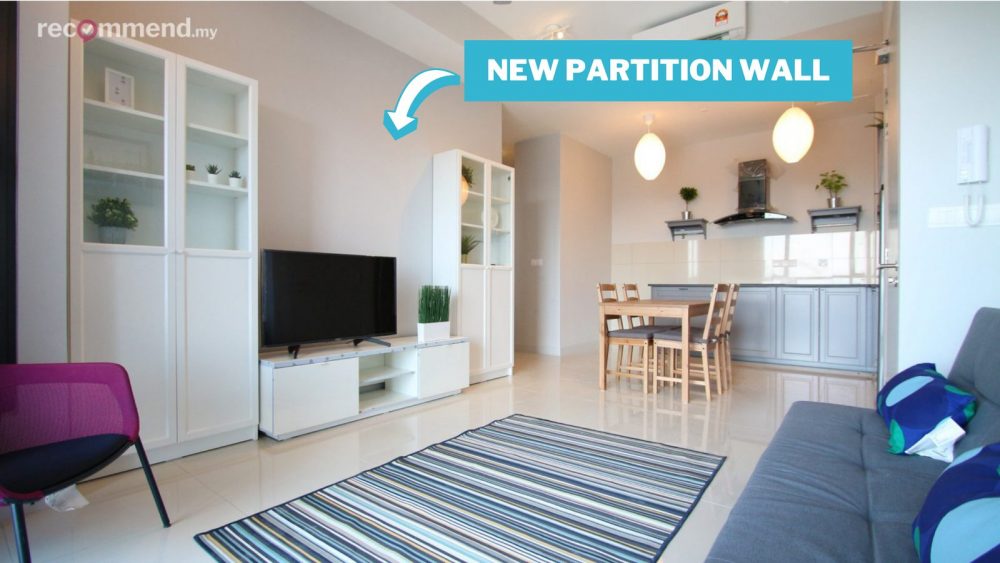
- Adding a new room partition or creating an additional room
- Installing air conditioning where none previously existed
- Installing new built-in wardrobes where none previously existed
- Replacing a standard vanity with a premium designer unit
- Adding a water heater to a previously cold-water bathroom
- Converting a car porch into a habitable space
Real-world example — the mixed invoice problem Your bathroom needs attention. The floor tiles are cracked (deductible repair) but you also decide to replace the entire vanity unit with a new one (capital expenditure). Your contractor sends one invoice for RM3,800. LHDN expects you to apportion this reasonably. Ask your contractor to itemise: tile repair RM800 (claim it), new vanity RM3,000 (capital — either non-deductible under 4(d), or capital allowance eligible under 4(a)). Always request itemised invoices for mixed jobs.
4. Direct Expenses — Claimable Under Both 4(a) and 4(d)
Section 33(1) ITA 1967 — “outgoings and expenses wholly and exclusively incurred in the production of income”
Direct expenses are costs directly tied to a specific property producing rental income. They are claimable regardless of whether you are Section 4(a) or 4(d), provided the property is actively rented when the expense is incurred.
Assessment tax (Cukai Taksiran)
The bi-annual local council tax on your property — paid to DBKL, MBPJ, MPAJ, or equivalent. Claimable in the year paid. Keep your council receipts or bank payment confirmation. Typically RM400 to RM1,200 per year for residential units depending on location and property size.
Quit rent / parcel rent (Cukai Tanah / Cukai Petak)
The annual state land tax. For strata properties, this is collected through the management corporation as parcel rent. Claimable in the year paid — typically RM50 to RM200 for residential units.
Mortgage interest — not principal
The interest component of your monthly mortgage instalment is fully deductible. The principal repayment is not — it is capital in nature. Your bank statement or an annual financing statement will show the breakdown. For Section 4(a) landlords, note that Section 33(2) of the ITA applies additional restrictions — consult a tax agent for complex financing structures.
Example — mortgage interest Monthly instalment: RM1,800. Of that, RM900 is interest and RM900 is principal. Annual deduction: RM900 × 12 = RM10,800. The RM10,800 principal repayment is never deductible.
Fire and landlord insurance premiums
Insurance taken on the rental property is deductible — standard fire insurance and landlord protection policies. Life insurance taken on yourself as the property owner is not deductible. Claim the premium in the year paid.
Repairs and maintenance (revenue)
Genuine revenue repairs are deductible in full with no cap. This includes plumbing, electrical repairs, repainting, air-conditioning servicing, appliance repairs (like-for-like), and general upkeep. The property must be actively rented at the time the expense is incurred.
Maintenance fee and sinking fund
Monthly maintenance fees and sinking fund contributions paid to the Joint Management Body (JMB) or Management Corporation (MC) are deductible. The Indah Water sewerage bill is also deductible as a direct property expense.
Agent commission — renewals only
Commission paid for renewing an existing tenancy or finding a replacement tenant is deductible. Commission paid to secure your very first tenant is not deductible — it is treated as an initial capital cost of creating the income source. This is one of the most common mistakes made by landlords.
Legal fees — tenancy renewals and rent enforcement
Legal fees for renewing a tenancy agreement and for enforcing rent collection (including pursuing a defaulting tenant) are deductible. Legal fees for the initial tenancy agreement are not.
Stamp duty on tenancy agreements
Stamp duty paid to LHDN on your tenancy agreement is a deductible rent collection cost — both for new agreements with replacement tenants and for renewals.
5. Indirect Expenses — Section 4(a) Only
Section 33(1) ITA 1967 — both direct and indirect expenses deductible for business source income only
Indirect expenses are overhead costs of running the rental as a business. They do not attach to a specific property but support the overall rental operation. These are only deductible if you are classified under Section 4(a).
Important restriction for Section 4(d) landlords Indirect expenses such as staff costs, accounting fees, and management overhead are not freely deductible under Section 4(d). LHDN restricts these to approximately 5% of total rental income for the year. Under Section 4(a), no such cap applies — all wholly and exclusively incurred indirect expenses are fully deductible.
Staff salaries and employment costs
Salaries, wages, EPF contributions, SOCSO, and EIS paid for employees who work in the rental business — maintenance workers, cleaners, security personnel, property managers — are fully deductible. The employment must be wholly and exclusively for the rental business.
Property management fees
Fees paid to a third-party property management company to manage your rental portfolio are deductible. This typically covers tenant sourcing, rent collection, maintenance coordination, and administration — commonly 8–12% of monthly rental collected.
Accounting, audit, and tax agent fees
Fees paid to your accountant, tax agent, company secretary, or auditor for managing the rental business accounts and filings are fully deductible under Section 4(a). Under Section 4(d), these are restricted to approximately 5% of rental income.
Advertising — replacement tenants
Advertising costs to find a replacement tenant (after the first) are deductible indirect expenses under Section 4(a). This includes property portal listings, social media advertising, and signage. Advertising to attract the very first tenant remains non-deductible under both sections.
Common area utilities
Electricity and water for common areas managed by a Section 4(a) operator — lobby lighting, corridor power, lift electricity, management office utilities — are deductible. Individual tenant unit utilities are the tenant’s responsibility.
Office and administrative costs
If you operate the rental as a business with a management office, administrative overhead costs — stationery, postage, telephone, office equipment — are deductible indirect expenses under Section 4(a).
6. What You Can Never Deduct
Regardless of classification, the following costs are never deductible as revenue expenses against rental income:
| Expense | Example | 4(a) | 4(d) | Reason |
|---|---|---|---|---|
| Renovation & capital improvements | Kitchen remodel, new room, extension | No | No | Capital in nature. Increases property value. |
| New furniture & appliances (where none existed) | New sofa, first A/C installation | Capital allowance | No | Capital expenditure. 4(a): claim via capital allowance over time. |
| First tenant costsAds, agent fee, initial legal | RM2,000 first agent commission + RM500 legal fee | No | No | Pre-income / initial capital cost. |
| Pre-rental expenditure | Painting done before first tenant moved in | No | No | Before rental commencement date. |
| Mortgage principal repayment | Capital component of monthly instalment | No | No | Capital repayment — not a production expense. |
| Personal expenses | Own utilities, travel, groceries | No | No | No private element — must be wholly for the property. |
| Repairs on vacant properties | Works done while unit sits empty | No | No | No rental income being produced at the time. |
| Accounting depreciation | Depreciation on furniture in your accounts | No | No | Not a tax-recognised deduction. Use capital allowance (4(a) only). |
7. Capital Allowances — The Section 4(a) Advantage
While capital expenditure cannot be deducted as a revenue expense, Section 4(a) landlords can recover the cost of qualifying assets over time through capital allowances under Schedule 3 of the ITA. This is one of the most significant advantages of the 4(a) classification — and it is unavailable to Section 4(d) landlords entirely.
Qualifying assets include furniture, air-conditioning units, water heaters, electrical appliances, and other plant and machinery used in the rental business. Standard rates:
- Initial allowance: 20% of the asset cost — claimable in the year of acquisition
- Annual allowance: 10% of the asset cost — claimable each subsequent year until fully written off
Capital allowance — worked example You purchase RM15,000 worth of furniture for your rental unit under Section 4(a).
Year 1: Initial allowance (20%) = RM3,000 + Annual allowance (10%) = RM1,500 → RM4,500 total deduction
Years 2–8: Annual allowance (10%) = RM1,500 per year
Total recovered: RM15,000 — the full purchase cost, spread over time.
Under Section 4(d), none of this RM15,000 is ever recoverable in any form.
Capital allowances that cannot be fully absorbed in a given year can, under Section 4(a), be carried forward to offset future rental income. This is a critical benefit for landlords with high asset expenditure relative to annual rental income.
8. Key Exceptions & Edge Case
The pre-rental expense trap
Expenses incurred before a property is first rented out are not deductible, even if maintenance in nature. Repainting or repairing a unit before the first tenant arrives cannot be claimed. The commencement date — the date the first tenancy agreement begins — is the starting point for all deductible expenses, as specified in Public Ruling No. 12/2018
The vacant property trap
If your property is vacant between tenants, repairs carried out during that vacancy are generally not deductible — there is no rental income being produced. An exception may apply if the property is temporarily vacant and actively being made available for letting. This is a nuanced area where professional advice is recommended.
Rental losses under Section 4(d)
If total deductible expenses exceed rental income in a given year under Section 4(d), the resulting loss is permanently disregarded. It cannot be offset against employment income or other income, and it cannot be carried forward to future years. This makes Section 4(a) classification especially valuable for high-cost properties relative to rental yield.
Multiple properties under Section 4(d)
If you own multiple properties under Section 4(d), a loss from Property A can be offset against rental income from Property B within the same year of assessment. However, any remaining combined loss cannot be offset against other income types such as your salary — it is disregarded.
Short-term rental / Airbnb classification
LHDN treats short-term rental income as business income under Section 4(a) if the activity resembles a business — active management, multiple units, and staff involvement. Airbnb operators at scale should assume Section 4(a) classification, file Form B, and check SST registration obligations if taxable turnover from commercial rental services exceeds RM1,000,000 over 12 months.
Forfeited security deposits
Security deposits are not rental income when received — they are a liability. If you forfeit part of a deposit (tenant damage, early termination), the forfeited amount becomes taxable income in the year you retain it. Keep records of when and why any deposit amount is forfeited.
Rent received in advance
Under Section 4(d), rental income is assessed on a receipt basis — if December 2024 rent is received in January 2025, it counts as 2025 income. Under Section 4(a), advance rentals are treated as gross business income in the year they become receivable. Refunds of advance rent are deductible in the relevant year.
Non-resident landlords
Non-residents (fewer than 182 days in Malaysia per year) are taxed at a flat 30% on net rental income with no personal reliefs, rebates, or personal deductions. Property expense deductions under Section 33(1) still apply — it is the rate and relief entitlements that differ. Non-residents file Form M.
9. Documentation — What LHDN Actually Requires
The most legitimate claim in the world will fail an audit without proper documentation. For every repair or maintenance claim, LHDN requires:
- The contractor’s full name and IC number (individuals) or business registration number (companies)
- The property address where the work was carried out
- The date the work was done
- A clear description of the scope of work — not just “repairs,” but what specifically was repaired
- The amount paid
What will not survive an audit A receipt that says “RM500 — repairs done” from an anonymous handyman. A cash payment with no documentation. An invoice with only a phone number and no contractor identity. LHDN can — and does — disallow claims where documentation does not meet these standards.
For informal contractors paid in cash, a handwritten A4 receipt with the contractor’s full name and IC number is acceptable provided it also includes the date, property address, scope of work, and amount. Cash payments without any receipt are not deductible.
For formal contractors, request a proper tax invoice or official receipt on company letterhead with the business registration number. Keep all documentation — receipts, invoices, tenancy agreements, assessment bills, insurance premiums, and bank statements — for a minimum of seven years. LHDN may audit your returns up to seven years from the filing date.
Simple system that works Create one folder per property per year of assessment. Every invoice goes in the day you receive it. At year-end, total all repair costs, separate revenue items from capital items, note any apportionment on mixed invoices, and enter into your tax return. For mixed invoices, highlight the claimable portion and note your apportionment basis in case LHDN asks.
10. Where and How to File
Rental income must be declared annually to LHDN via the MyTax e-Filing portal at mytax.hasil.gov.my. From YA 2024, LHDN requires most taxpayers to use the electronic system.
Section 4(d)
Form BE
Resident individuals with no other business income. Declare under “Statutory Income from Rents.”Deadline: 30 April (manual) · 15 May (e-Filing)
Section 4(a)
Form B
Resident individuals with business income including active rental operations.Deadline: 30 June (manual) · 15 July (e-Filing)
Non-residents
Form M
Non-resident landlords. Flat 30% tax rate. No personal reliefs or rebates applicable.Deadline: 30 April (manual) · 15 May (e-Filing)
Net rental income — after all allowable deductions — is the assessable figure. For Malaysian tax residents, this is added to your other income (salary, dividends, etc.) and taxed at progressive rates from 0% to 30%. Most salaried landlords in the RM4,000–RM8,000/month salary range will see an effective marginal rate on net rental income of approximately 11% to 24%, after personal reliefs.
11. Complete Expense Checklist
| Expense | Real example | 4(a) | 4(d) | Key condition |
|---|---|---|---|---|
| Direct expenses — claimable under both sections | ||||
| Assessment tax | RM600/yr to DBKL | Yes | Yes | Claimable in year paid |
| Quit rent / parcel rent | RM80/yr to state authority | Yes | Yes | Claimable in year paid |
| Mortgage interestNot principal | RM900/mo interest component | Yes | Yes | Interest only. S.33(2) applies for 4(a). |
| Fire / landlord insurance | RM400/yr fire insurance premium | Yes | Yes | On the property — not personal life insurance |
| Repairs & maintenanceRevenue in nature | Leak fix RM500, repaint RM1,200 | Yes | Yes | Restores — does not improve. Itemised invoice required. |
| Air-con servicing | RM120/unit service call | Yes | Yes | Routine maintenance — clearly revenue in nature |
| Pest control | Quarterly treatment RM300 | Yes | Yes | Direct maintenance expense |
| Maintenance fee & sinking fund | RM250/mo condo fee | Yes | Yes | Includes Indah Water bills |
| Agent commissionRenewals only | 1 month rent for tenant change | Yes | Yes | Renewals only — NOT for first tenant |
| Legal feesTenancy renewals | RM400 lawyer fee for renewal | Yes | Yes | Renewals & rent enforcement — NOT initial agreement |
| Stamp duty on tenancy | RM200 stamping fee | Yes | Yes | Rent collection cost |
| Indirect expenses — Section 4(a) only | ||||
| Staff salariesCleaners, maintenance, security | Cleaner RM1,500/mo + EPF | Yes | 4(a) only | Wholly for the rental business |
| Property management fees | 8% of monthly rent collected | Yes | 4(a) only | Third-party management company |
| Accounting / audit / tax agent | RM1,200 tax agent, RM2,000 audit | Yes | 4(a) only | Restricted to ~5% of rental income under 4(d) |
| AdvertisingReplacement tenants | Portal listing RM200 after first tenant | Yes | 4(a) only | NOT for first tenant advertising |
| Common area utilities | Lobby electricity RM300/mo | Yes | 4(a) only | Shared areas only — not individual unit utilities |
| Furniture & fittingsCapital allowance — not direct deduction | RM15,000 furniture: 20% initial + 10%/yr annual allowance | Capital allowance | No | Depreciated over asset life under Schedule 3 ITA |
| Never deductible under any section | ||||
| Renovations / capital improvements | New kitchen, room addition, full remodel | No | No | Capital expenditure. Value-enhancing. |
| First tenant costs | RM2,000 first agent commission | No | No | Initial capital cost of creating income source |
| Pre-rental expenses | Painting before first tenant | No | No | Before rental commencement date |
| Mortgage principal | Capital component of monthly instalment | No | No | Capital repayment — not a production expense |
| Personal expenses | Personal travel, groceries, own utilities | No | No | Must be wholly for the property |
| Repairs on vacant properties | Works done while unit sits empty | No | No | No income being produced at the time |
The Bottom Line
The difference between a landlord who pays significant tax on rental income and one who minimises their liability legally often comes down to three things: knowing your classification under Section 4(a) or 4(d), understanding the repair-versus-renovation distinction under Section 33(1), and keeping documentation that survives an LHDN audit.
Repair — claim it fully. Renovate — you cannot. New assets under Section 4(a) — claim via capital allowance over time. And always get a proper, itemised invoice.
For complex situations — mixed-use properties, significant capital expenditure, multiple properties with rental losses, or uncertainty about your Section 4(a) vs 4(d) classification — engage a licensed tax agent. The cost of professional advice is itself a deductible indirect expense under Section 4(a).
Disclaimer: This article is for general educational purposes only and does not constitute professional tax advice. It is based on the Income Tax Act 1967 and LHDN Public Ruling No. 12/2018 as understood at the time of writing. Tax laws and LHDN interpretations may change. For advice specific to your circumstances, consult a licensed tax agent or professional advisor registered with the Chartered Tax Institute of Malaysia (CTIM).