

Last year I stayed in a small hotel in Osaka. The bathroom was the size of a wardrobe. And when I flushed the toilet, water started running out of a little tap on top of the cistern, creating a little stream of exposed water before flowing into the toilet tank.
You’re meant to wash your hands there. The water you use runs into the tank below and becomes the water for your next flush. No separate sink needed. No wasted water. In a bathroom that small, no wasted space either.
I came home thinking about how many clever, boring, everyday fixtures exist in other countries that we’ve simply never picked up here. Some of them would work brilliantly in a Malaysian home. Some are already sold on Shopee and not many people buy them.
So here are 10 of them. Where they came from, what they actually do, and whether you can get one fitted in your house next week or whether you’ll need to plan it into your next renovation.
Table of Contents
1. The toilet tap for washing your hands as it refills (Japan)
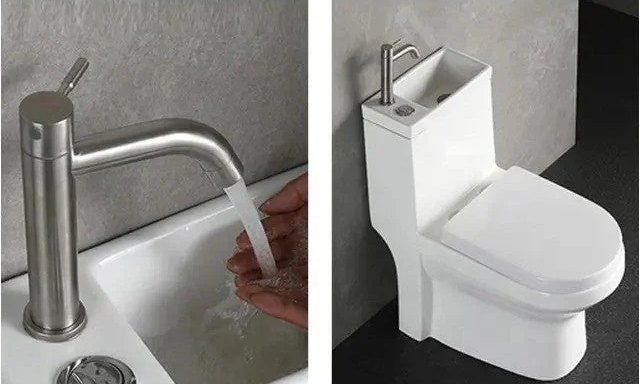
The one from my Osaka hotel. A small tap and basin sit on top of the cistern lid. Flush, and clean water from the supply pipe comes out of the spout so you can wash your hands. That water then drains into the tank and gets used for the next flush.
Japan has had these since 1956. They caught on because Japanese city apartments are tiny and a separate hand basin was a luxury. It also fits how seriously Japan takes water. The Japanese word for toilet, otearai, literally means “hand-washing”.
Why it makes sense here: every flush uses water you’ve already used once. And in the half-bath downstairs that’s barely big enough to turn around in, you get your hand basin without giving up any floor space.
Can you get one? I couldn’t find it on any website in Malaysia. There’s no local sanitaryware brand selling them. I only found one seller in SG for almost RM1000! Perhaps a new “untapped” market? 😆😆😆
Who can install it: If you can find one, a handyman will have it done in under an hour.
2. The window that opens two different ways (Germany)
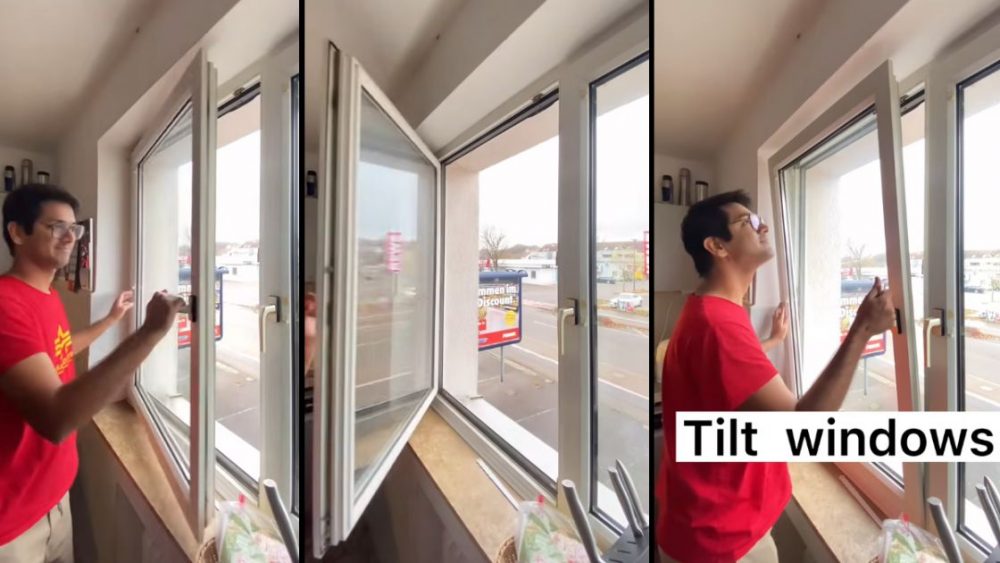
Turn the handle one way and the window swings inward like a door. Turn it further and the top of the window tilts inward instead, leaving a gap along the top for air.
Wilhelm and Elfriede Frank invented the hardware and founded Roto Frank in Stuttgart in 1935. Germans call it Dreh-Kipp, turn-tilt. It’s now the default window across most of Europe.
Why it makes sense here: the tilt setting. Right now, when a storm rolls in at 4pm, you run around the house slamming every window shut, and the rooms turn stuffy. A tilted window lets air keep moving while the rain runs down the outside of the glass instead of into your living room. It also swings fully inward, which means you can clean the outside of your windows from inside the house. Anyone living in a high rise will understand why that’s useful.
Can you get one? Yes, through aluminium and uPVC window fabricators, though it’s a niche request here. Expect quote-based pricing rather than a shelf price.
Who installs it: a window contractor. This is a window-replacement job, so it belongs in a renovation, not a Saturday afternoon.
3. The tap you turn on with your foot (Italy)
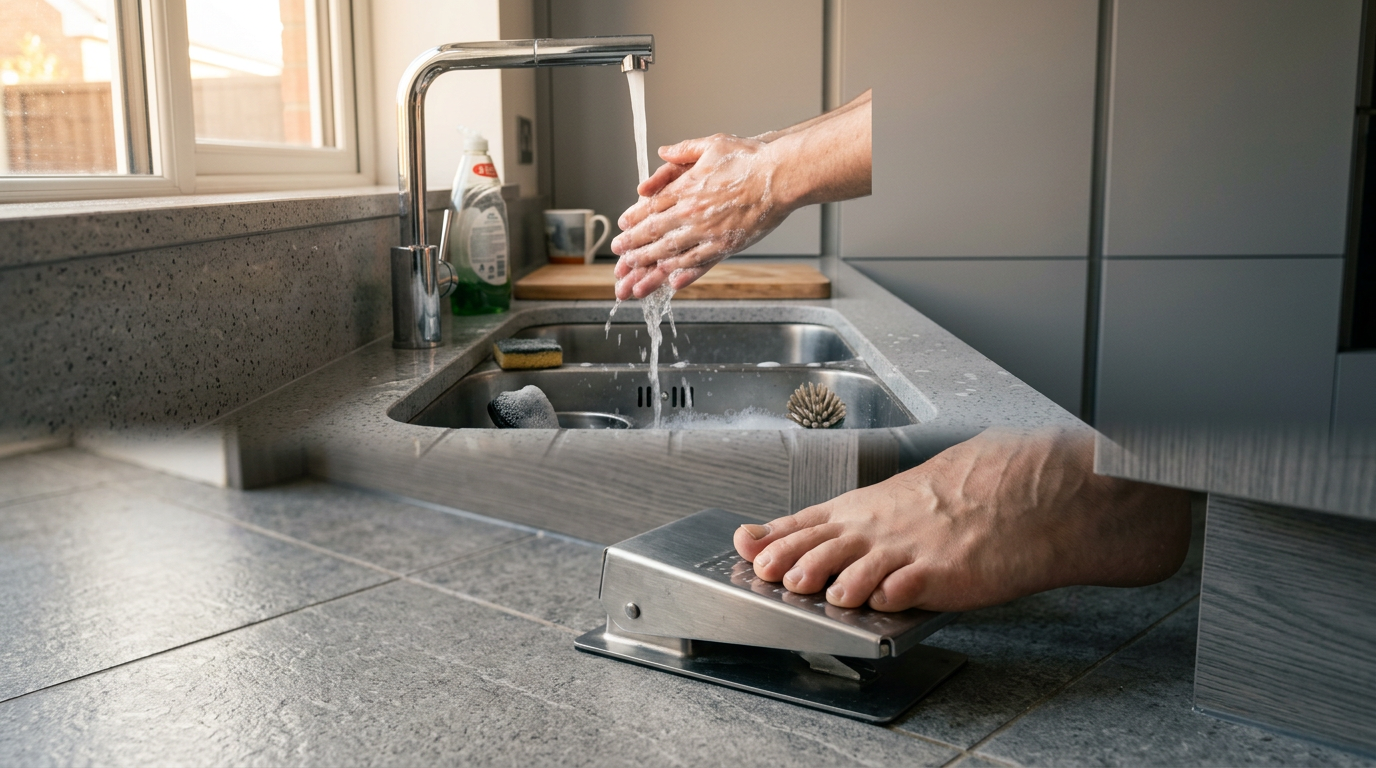
Italy and the rest of Europe have used these for decades, mostly in hospitals, labs and commercial kitchens. Italian manufacturers like Idral still make heavy brass pedal mixers for exactly this.
Why it makes sense here: think about what happens when you’re washing chicken, or your hands are covered in soap, or you’re holding a baby. You either leave the tap running the whole time or you smear whatever’s on your hands onto the tap handle. A pedal solves both. Nothing runs while you’re lathering, and you never touch the tap with dirty hands.
Can you get one? Yes, but almost nobody puts them in homes. You’ll find them on Lazada and through hardware suppliers, roughly RM50 to RM200 for a brass pedal valve. Search for “brass pedal sink” and it should appear!
Who installs it: a plumber. It’s a mechanical valve under the basin with a pedal on the floor. No wiring involved. If you’ve ever fixed a leaking kitchen tap yourself, this is a step up from that but still a straightforward job.
4. The toilet cistern hidden inside the wall (Switzerland)
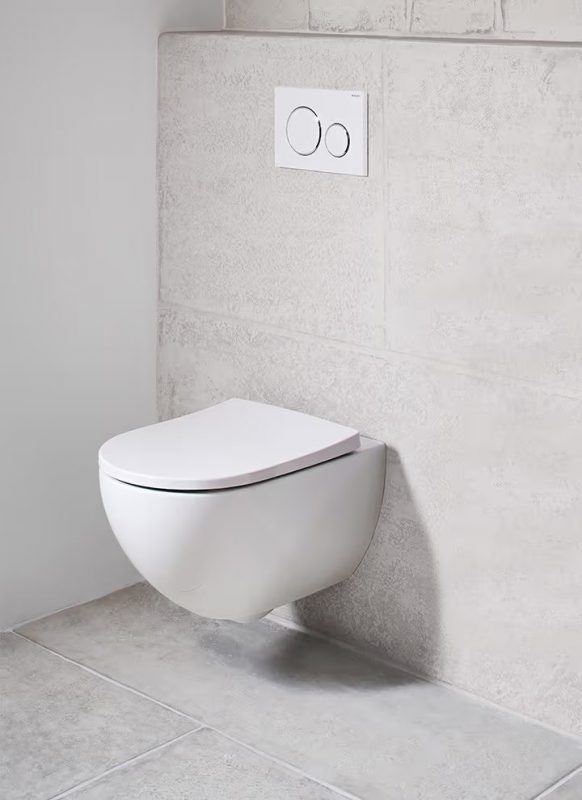
Instead of a big ceramic tank behind your toilet, the cistern sits inside the wall. All you see is a slim flush plate. Pair it with a wall-hung bowl and the whole toilet floats clear of the floor.
Swiss company Geberit launched the first concealed cistern in 1964. It was first fitted in a hotel in the Swiss village of Grindelwald, where staff had to keep explaining to guests how to flush it. Those original cisterns ran for 50 years without a single replacement. Today it’s the European standard, with more than 60 million units installed.
Why it makes sense here: small bathrooms. Malaysian condo bathrooms are not generous, and a bulky cistern eats space you can’t spare. A wall-hung bowl also means there’s no awkward gap behind the toilet collecting dust and no ceramic base to scrub around. You mop straight underneath.
Can you get one? Yes. Geberit is officially in Malaysia, and Grohe and R&T are common alternatives. A complete wall-hung set typically starts from RM2,500.
Who installs it: a plumber or renovation contractor. But it needs a wall cavity or a built-out false wall, so this is a renovation decision, not a retrofit. If a bathroom refresh is already on your list, read our bathroom renovation cost guide and our roundup of small bathroom renovation ideas first.
5. The shower drain that runs along the wall (Netherlands)
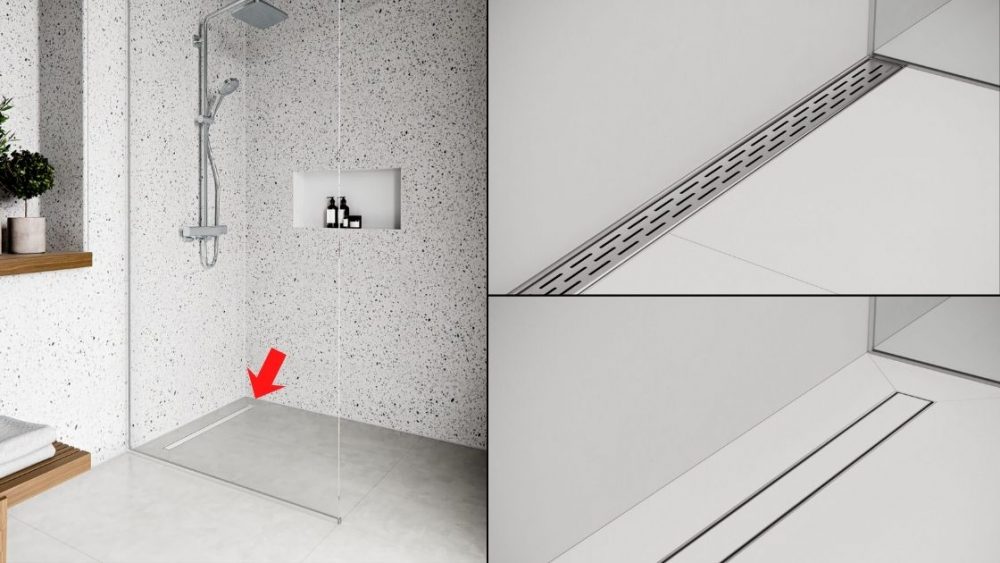
Instead of a square floor trap in the middle of your shower, a long slim slot runs along one wall or across the shower entrance.
Two brothers named Keizers invented it in the village of Losser in the Netherlands, in the family business that became Easy Drain. The point was to make a shower you could walk straight into with no step, no kerb, no lip.
Why it makes sense here: two reasons. First, the floor only needs to slope in one direction, so you can use big tiles instead of chopping small ones into a funnel shape around a centre drain. Second, less puddles since there is more drain area.
Can you get one? Yes, and it’s not expensive. Bathroom suppliers stock them and there are plenty on Shopee and Lazada, roughly RM200 to RM500 depending on length.
Who installs it: a plumber plus a tiler, during waterproofing. The drain itself is cheap. Getting the floor slope and the waterproofing right is the part that matters, and getting it wrong is one of the more common bathroom renovation mistakes. Renovation job, not a weekend one.
6. The bathroom mirror that never fogs up (United Kingdom)

A thin heating pad sits behind the glass and keeps the mirror surface slightly warm. Steam doesn’t condense on a warm surface, so the mirror stays clear even while the shower is running.
Almost every bathroom retailer in the UK sells these. They’re popular because they cost about a pound or two a year to run, which is to say almost nothing.
Why it makes sense here: the obvious win is that you can actually see yourself after a shower instead of wiping the mirror with your forearm. The quieter win is condensation. Water that isn’t sitting on your mirror is water that isn’t feeding mould in your bathroom. (If yours is already showing black lines, here’s how to repair mouldy sealant.)
Can you get one? Easily. LED anti-fog mirrors are all over Shopee and Lazada, roughly RM150 to RM800 depending on size, or you can buy just the demister pad on its own for around RM30 to RM100.
Who installs it: an electrician. The pad is hardwired behind the mirror, and any wiring in a wet room is work you want a licensed person doing. Our electrical and wiring cost guide gives you a sense of the rates.
7. The cabinet that dries your dishes for you (Finland)
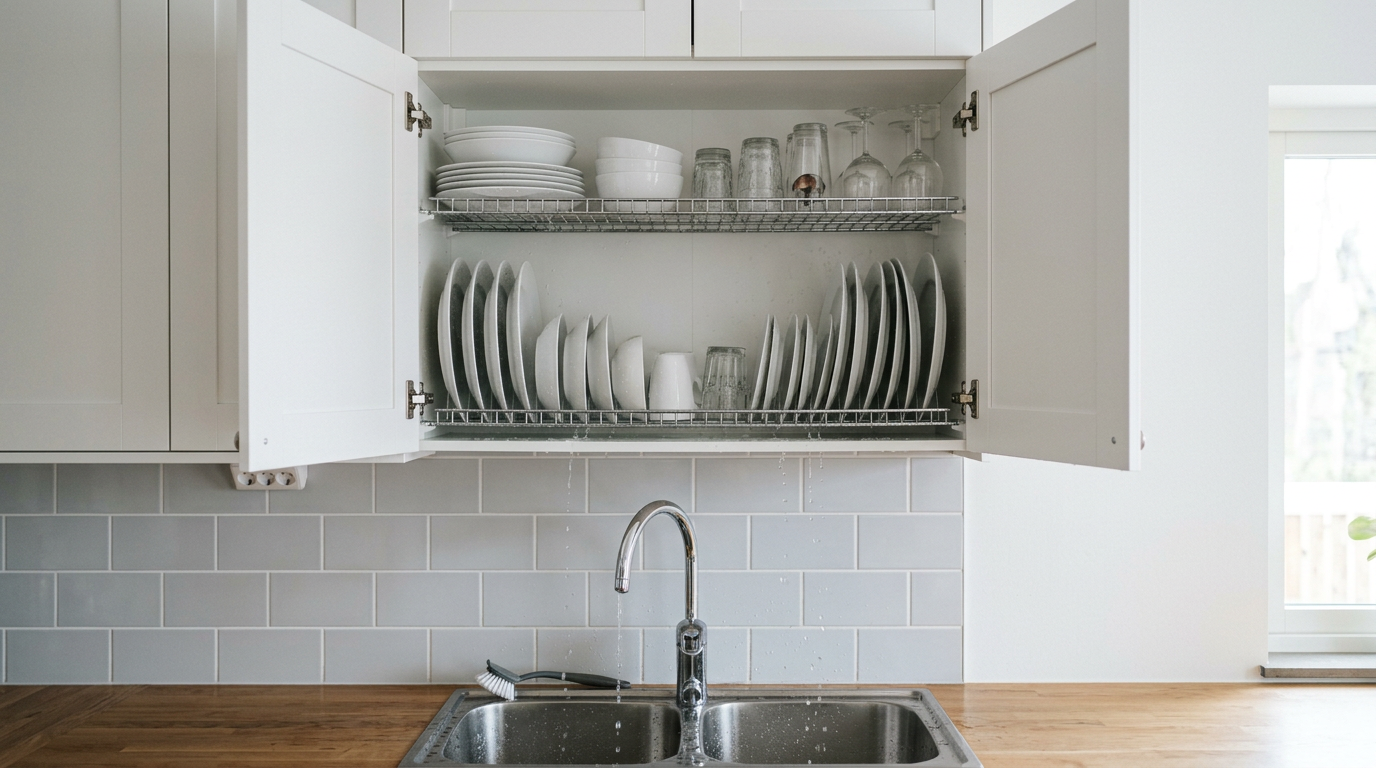
Open the cupboard above a Finnish kitchen sink and there’s no solid shelf at the bottom. Just wire racks, and no base at all. You wash a plate, put it straight into the cupboard while it’s still dripping, and close the door. The water drips into the sink. The plate dries where it’s already stored.
Wash, place, done. There is no drying step and no putting-away step, because they’re the same step.
A Finnish woman named Maiju Gebhard came up with it in the 1940s. She had worked out that a Finnish housewife spent 30,450 hours of her life washing dishes, roughly ten years of eight-hour days, and decided the drying was the part worth killing. Her design is still in Finnish kitchens today.
Why it makes sense here: the countertop. Most Malaysian kitchens are fighting for counter space, and a dish rack permanently occupies a chunk of it while looking like a dish rack. This gets rid of it entirely. HOWEVER, in a Malaysian kitchen where the air is not as dry, your dishes will sit damp for longer. Treat this as a way to reclaim your counter, not a way to dry dishes faster. Leaving the cupboard door open for a while helps.
Can you get one? These are typically chosen as part of a modular kitchen installation, not as a ready-made product. Or, you can convert an IKEA KUNGSFORS or HULTARP wall system, or ask a carpenter to convert an existing cupboard above your sink by taking out the base panel and fitting wire racks.
Who installs it: a carpenter or handyman.
8. The heated rod that keeps mould out of your wardrobe (United States)
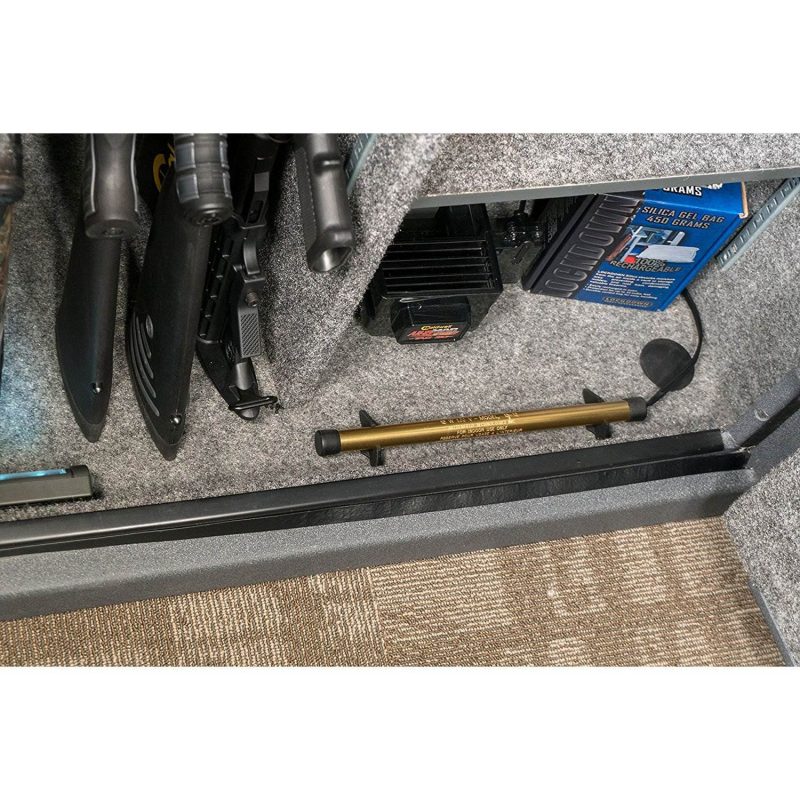
You already know this problem. You pull out a leather handbag you haven’t touched in three months and it has a fine white fuzz on it. Or the jacket you only wear for weddings comes out smelling like a storeroom. So, your only answer is Hungry Hippo.
But, the American answer is a slim heating rod mounted horizontally in the wardrobe. It gets gently warm, that warm air rises, cooler air is drawn in behind it, and a slow current keeps circulating. Warm air holds moisture better than cool air, so the relative humidity inside the enclosed cupboard drops just enough that mould can’t get established. Americans mostly use it for gun safes, damp cabinets and boat interiors. They run on less electricity than a light bulb.
Why it makes sense here: because right now our answer is to buy those plastic tubs of moisture-absorbing crystals, watch them fill with water, throw them away and buy more. Forever. A rod is a one-time fitting that costs a few sen a day to run and produces no plastic waste.
Two things to watch:
1. Check the voltage. Many of these products run on 110V/120V. Malaysia runs on 240V. Buy a 240V version rather than importing a US unit. Search for “dehumidifying rod”.
2. It only works in a reasonably closed wardrobe. This is a warm-air trick, not a machine that pulls water out of the air. If your wardrobe has louvred doors or big gaps, the effect leaks away. It works best in a proper built-in wardrobe with doors that actually shut.
Who installs it: you can plug one in yourself (if you can find a plug point). A handyman is worth it if you want the cable run neatly and a socket added inside the wardrobe rather than a wire trailing out of the door.
9. The machine that turns last night’s leftovers into powder (South Korea)
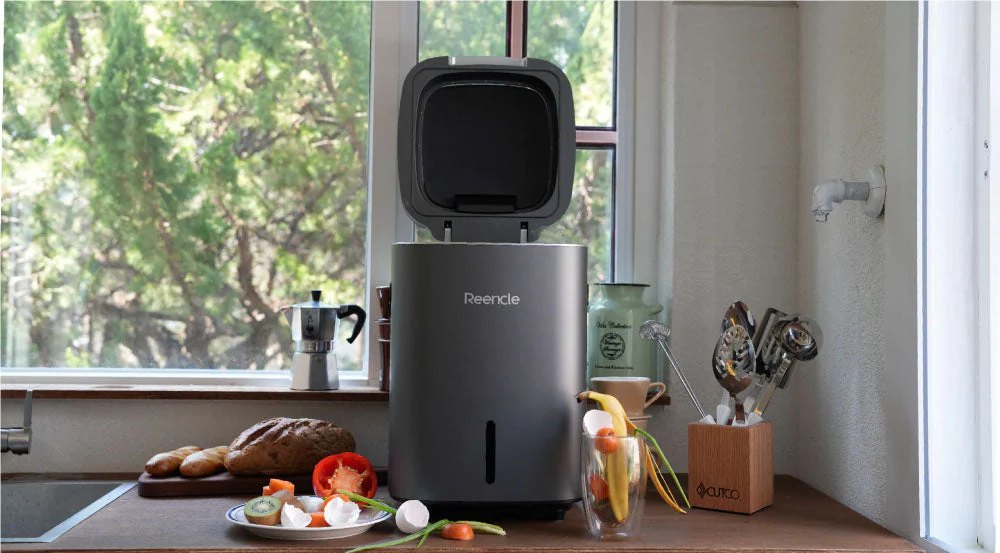
A countertop machine that heats and grinds food scraps. In a few hours, a bin of wet, smelly leftovers becomes a dry, sterile, odourless powder that looks like soil, at a fraction of the original volume.
The reason these took off in South Korea is not that Koreans love gadgets. It’s that Korea made food waste expensive. The country banned sending food waste to landfill in 2005, then brought in a system where households are billed by weight through RFID smart bins. When you’re literally paying by the kilo, a machine that shrinks your food waste by 80 to 90% starts to make financial sense. Korea’s food waste recycling rate is now around 95%.
A Malaysian think tank, EMIR Research, has already argued that Korea’s weight-based food waste system would work here, pointing out that we already run RFID on MyKad and on our tolls. So this may be less exotic than it sounds in a few years.
Why it makes sense here: the rubbish chute run. Anyone in a condo knows the routine. You cook, and then at 10pm you’re carrying a dripping bag of prawn shells down the corridor because if you leave it in the kitchen overnight you will have ants by morning and possibly worse. A food cycler ends that. Dry powder doesn’t smell and doesn’t attract anything. (It won’t solve an existing infestation, though. For that you’ll want proper pest control.)
Can you get one? It’s an import. Expect a serious price, in the region of RM2,500
Who installs it: nobody. It plugs in.
10. The water heater that runs like an aircon in reverse (Japan)
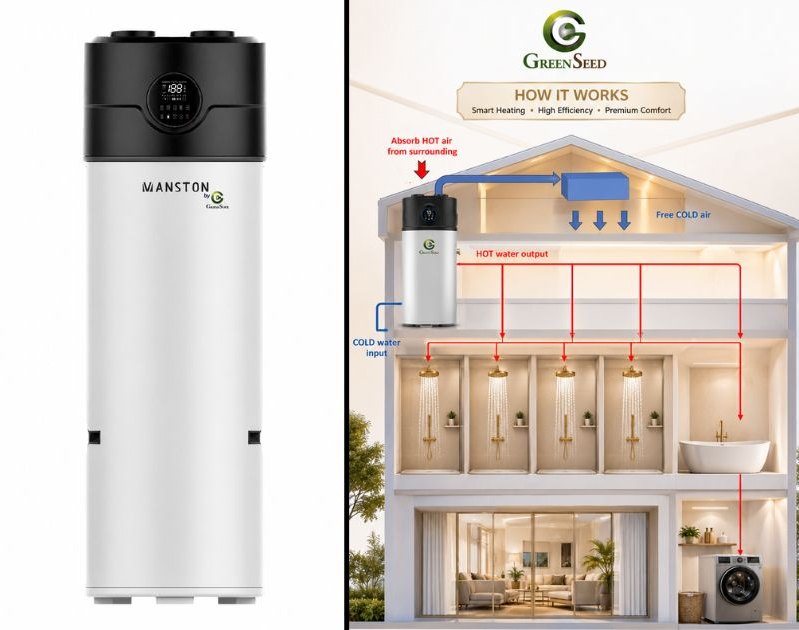
Most Malaysian homes heat water one of two ways. An instant heater, which sometimes gives you disappointing pressure. Or a storage tank with an electric element inside, which is basically a giant kettle burning electricity to heat water from cold.
A heat pump water heater doesn’t make heat. It moves it. It works like an aircon running backwards, pulling warmth out of the surrounding air and pushing it into a water tank.
Japan commercialised this in April 2001 as “Eco Cute”, developed jointly by TEPCO, Denso and CRIEPI. Early units had a coefficient of performance of 3.5, meaning they produced 3.5 times more heat energy than the electrical energy they consumed. Newer ones hit 5.1. By 2016 there were around 5 million of them running in Japanese homes.
Why Malaysia is close to the perfect place for one: a heat pump gets more efficient the warmer the air around it is. Japan runs these through Hokkaido winters at minus 20°C and still saves 43 to 54% on energy. Our air never drops below about 24°C. The thing would be running near its best all year round. At a COP of 4, you’re using roughly a quarter of the electricity a conventional element would use for the same hot water. With TNB tariffs going up, that’s not a small thing.
Small bonus: it blows out cooler air, so the yard where you installed it gets very slightly cooler.
The limitations: it needs a storage tank and somewhere to put it, the upfront cost is several times an instant heater, and it heats water gradually rather than on demand. This is a landed-home or major-renovation item. If you’re in a condo, an instant water heater is still the sensible choice.
Can you get one? Domestically, it’s rare and specialist. Most heat pump water heaters here are in hotels and commercial buildings.
Who installs it: a plumber and an electrician together.
How much does a handyman charge for this kind of work?
Some of the items above are small-fixture jobs, and Malaysian handymen price small jobs per task rather than by the hour. The pros on Recommend.my charge general labour from around RM40 per hour. For the plumbing-side items on this list, minor plumbing fixes such as a tap or pipe seal run about RM80 to RM120 per task, and electrical work like replacing a switch or outlet runs about RM120 to RM150 per task.
Final pricing depends on the job, the materials and how far the pro has to travel. You’ll get a quote before any work starts. For a fuller breakdown, see our guide on how much it costs to hire a handyman in Malaysia.
Top-rated handyman pros in Kuala Lumpur
Recommend.my has hundreds of handymen ready to take your jobs. With average 4.7 stars across 1,233 reviews. See the full list of handyman contractors in Kuala Lumpur, or browse plumbers and electricians.
What customers say about Recommend.my handyman services
Wong, Puchong — “Very good service by them, very trustworthy and the result is amazing.”
Review for Anasanis Enterprise, 7 July 2026Siti, Cheras — “Very professional in handling my furniture”
Review for Ayaan & Arham Enterprise, 10 July 2026Wei Keat, Kuchai Lama — “Owner is hands on and professional, staff is efficient”
Review for Nor Hasri Utara Business, 12 July 2026
Before you book: a quick checklist
✅ Buy the fixture first, or ask the pro to source it. Several of these are Shopee or Lazada items. Have them on hand before the pro arrives, or agree upfront who’s buying.
✅ Check the voltage on anything imported. Malaysia runs 240V. American products often don’t.
✅ Confirm it fits. Cistern lids, mirror sizes and drain lengths all vary. Measure before you order.
✅ Ask your condo management first if the job touches plumbing, drainage or the building’s exterior. Some buildings need approval and a work permit.
✅ Clear the work area. Move furniture and clutter out of the way so the pro isn’t working around your things.
✅ Get the quote in writing before work starts, including materials.
Book a handyman on Recommend.my
Tell us what you’re trying to fit and we’ll match you with a pro who’s done it before.